
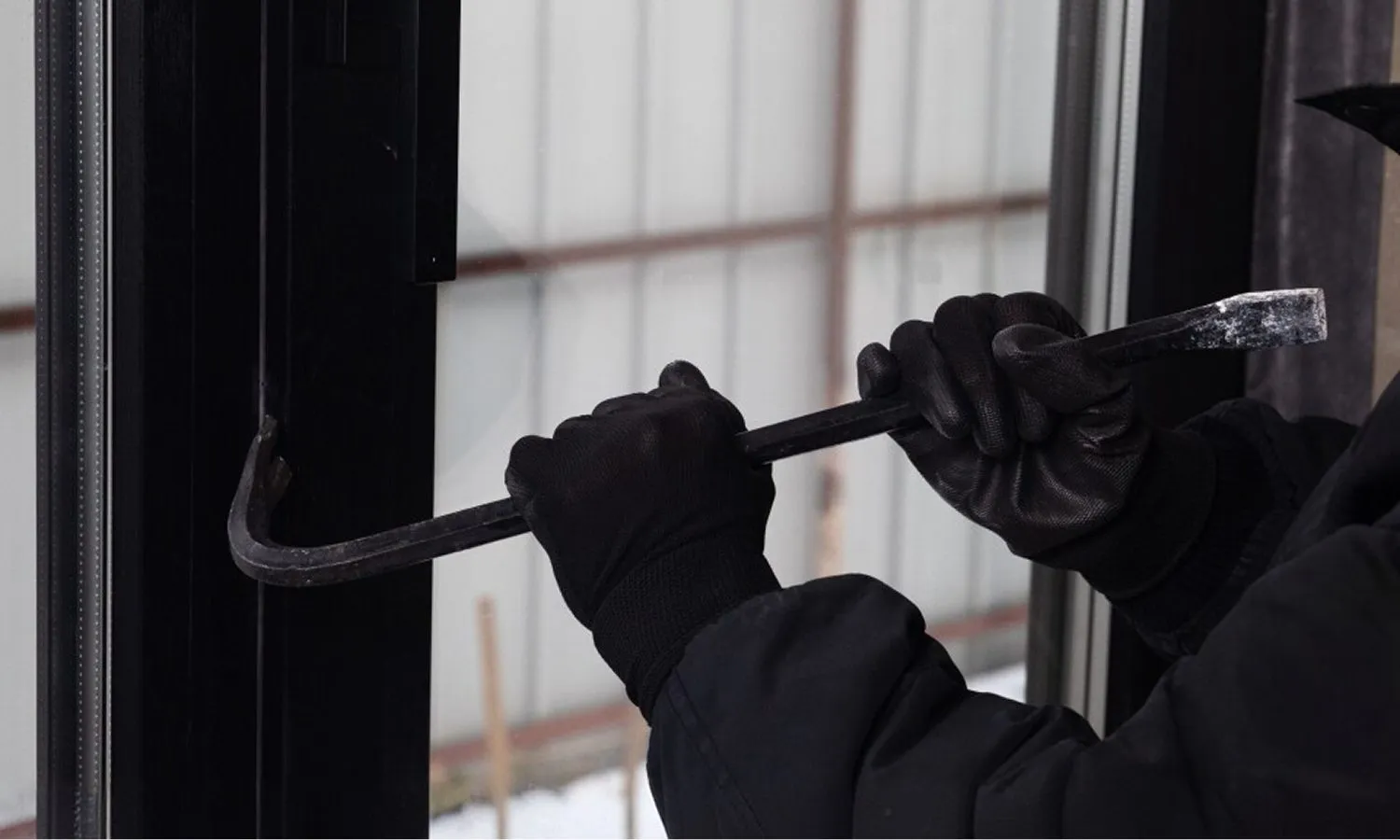




The opening first, then the hardware.
The door is open and should not be. The jamb is split where the strike sat, the frame is pushed out around the pocket, and the lock is still hanging there, turning, holding nothing. Somebody put a bar between the door and the frame and leaned on it, and the opening gave where every lock is weakest. The question is what it takes to make this a lock again.
Forced entry concentrates at the lock edge and the strike, so the damage is predictable: a strike torn out of a soft jamb, a frame spread around its pocket, a bent lock edge, a cylinder twisted out of its hole. As locksmiths we work the opening first and the lock second, because a lock fitted into a frame that has moved is fitted wrong. Where an entry cannot be made to latch that night, it is secured as far as the lock allows and the permanent repair follows.
Scope depends on what moved. A lock pried at its edge may need the jamb rebuilt around a new strike and the cylinder replaced. A door hit hard enough to shift the frame is a frame job first, and a lock dropped into a frame that is still deformed will be loose again within months. Hinges get looked at too, because screws torn through a soft jamb let the lock sag off its strike, however new the lock is.
A frame spread past square, a door cracked through its edge: straightening those is work somebody pays for twice, and we will say so. Glazing is a separate trade, so a smashed panel is a glazier’s work, and the lock, the frame and the hardware are ours. Every key that was in the building is now an unknown, which is a keying question rather than a repair. A lock that failed on its own, rather than being forced, is emergency response.
Where we do this work
- Offices
- Storefronts
- Restaurants
- Apartment & condo properties
- Warehouses
- Medical facilities
- Multi-tenant buildings
What’s included
-
Entry point secured
The forced opening made as secure as the lock allows that night, before anything is rebuilt.
-
Damaged locks
Sheared bolts, cylinders turned in their holes, lock bodies that took the load and lost, repaired or replaced.
-
Broken doors and frames
Bent and cracked lock edges, torn hinge screws, split jambs and strike pockets spread open, which is where a forced lock usually gives first.
-
The opening before the lock
Door, frame and strike brought back to a line the latch can meet, and the lock fitted to that rather than to the damage.
-
Keys that are now unknown
Anything taken during the entry still opens what it opened before, which is a rekeying question alongside the lock repair.
-
Operations back to normal
The entrance working the way the building actually uses it, locking the way it did before.
Triggers
When a lock has been forced
Break-in repair is not a call about a lock somebody wants changed. It is a locksmith call about a lock that was forced, and about everything that forcing it left behind.
-
A door was forced and now the door will not close right
It binds on the frame, or it swings and the latch never finds the strike.
-
The strike is on the floor and the jamb is split where it sat
The screws pulled through, and took a piece of the frame with them.
-
The lock still turns, but you do not trust it
A bolt that took the load can be bent inside the case, and a cylinder can be turned in its hole without looking touched.
-
The frame is bent and the lock has not lined up since
It may still lock today. A lock that is out of line stops latching reliably long before anybody gets around to it.
FAQ
After a break-in, the questions we actually get.
Don’t see yours? Call (857) 327-1767
What does a break-in lock repair cost?
It depends on how far the damage went past the lock, which is why we would rather look at the opening than name a figure over the phone. A lock that needs a strike and a cylinder is not the same job as a frame that has to be brought back toward square. What you get before any work starts is the price for that work, with no hidden fees.
The lock was forced overnight. Does this have to wait for the morning?
No. We work 24/7, Monday to Sunday, across Boston and the surrounding 30-mile area. Getting an entry into a state the building can be left in is emergency work and has its own page; the frame, the door and the lock that got broken are the repair, and that is this one. Where an entry cannot be made to latch that night, it is secured as far as the lock allows and the permanent repair follows.
Why repair the frame before touching the lock, and can a bent one be straightened?
Because a lock takes its alignment from the opening it sits in: a strike screwed to a jamb that has been spread holds exactly as well as that jamb does, and a bolt reaching for a strike the door no longer lines up with will drag, or miss. How far the frame moved decides what putting it back takes. A jamb split around the strike pocket is often rebuilt and reinforced so a new strike has solid material behind it, while a frame spread past square, or a steel frame deformed along its length, is a different job and belongs with lock and frame repair. We will tell you which one you are looking at before anything is ordered.
The lock still works. Does it need replacing anyway?
Worth checking rather than assuming. A bolt that took the load can be bent inside the case, a cylinder can be turned in its hole without looking damaged, and a strike that held once has usually given some of its screws up to the jamb. If keys were taken during the entry, that is a separate question: the locks those keys open are a rekeying job, not a repair.
How do I know the lock is right when the locksmith leaves?
The test is mechanical rather than visual. The door should close under its own weight without being pushed, the latch should catch on the first try from a normal swing, the bolt should throw its full length into the strike without being forced, and the key should turn with the effort it took before. A lock that only secures if you lift the door or lean on it has not been repaired yet.
Our insurer will want something in writing. Can you do that?
What was found and what was done gets written down and handed over: the damage to the lock and the opening, the parts replaced, the work carried out. That is usually what an insurer asks for. What happens with the claim itself stays between you and them.
Does a break-in mean we should upgrade the locks?
Sometimes, and sometimes not. Where an entry gave at a point that was always weak, a better strike, longer screws reaching solid material behind the jamb, or a lock built to resist force is worth considering, and high-security locks exist for exactly that. A lock that was forced because the frame behind it was already soft does not need a better lock, it needs a frame. We will say which of the two you have.
Emergency
Break-in, failed lock, or locked out?
When your property’s security is compromised, our emergency locksmiths respond immediately to repair locks, replace compromised cylinders, and restore reliable operation.
- Commercial Lockouts
- Break-In Lock Repairs
- Emergency Cylinder Replacements
- 24/7 After-Hours Response
Request a quote
Request a quote
Our client services team is standing by to assist with locksmith services, lock changes, high-security hardware, master key systems, lock repairs, rekeying, and emergency security dispatch!
- Hours
- Monday – Sunday: 24/7 Service
- Service area
- Boston and surrounding 30-mile radius
Fully insured by Hiscox
- Google rating
- Verified Screened professionals
- Hiscox Fully insured
- Transparent pricing No hidden fees