
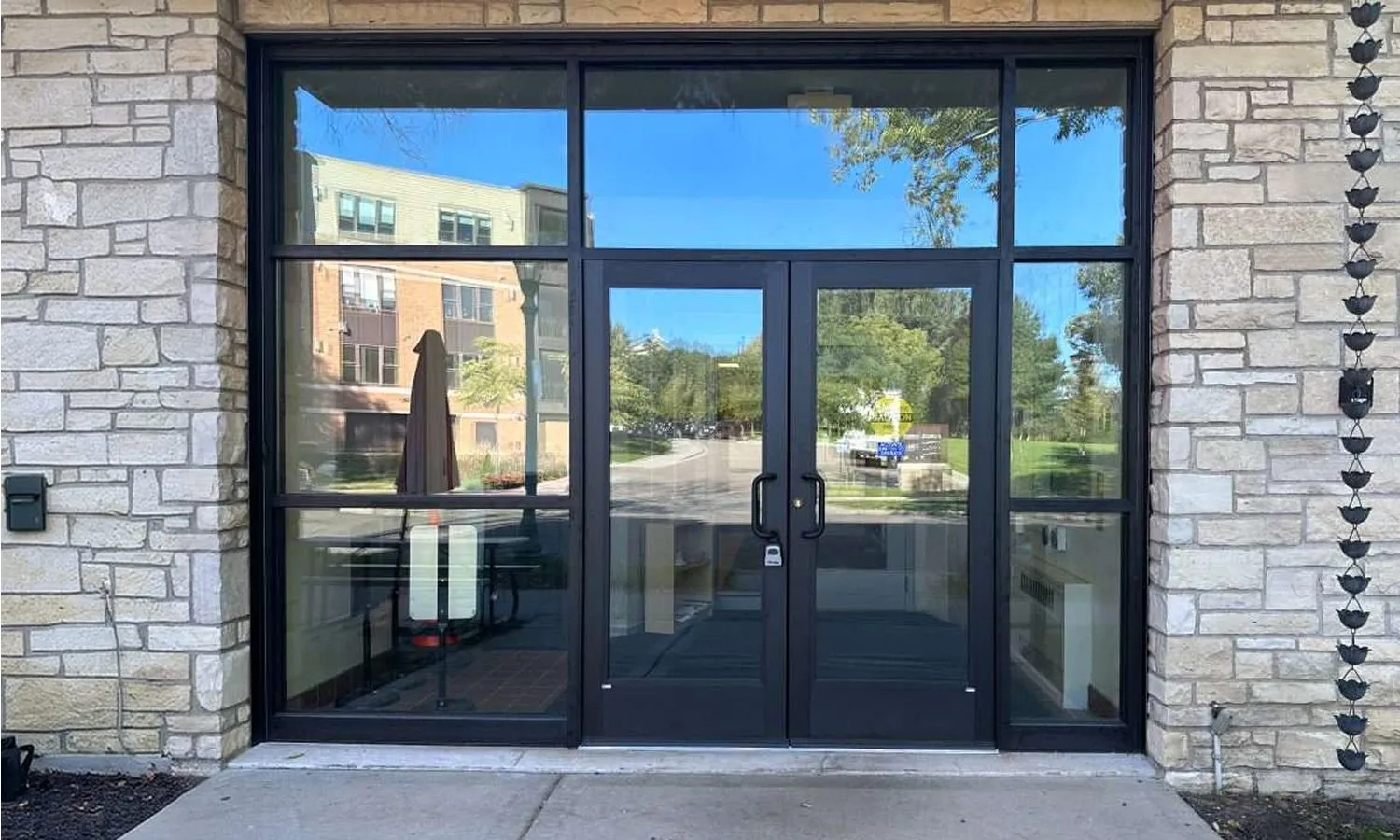




The lock gets blamed. The door moved.
A lock that won’t secure is rarely a broken lock. A rear entrance gets used three hundred times a day. Staff start pulling on the handle to get the bolt to turn. Someone replaces the cylinder, and six weeks later the same lock is doing the same thing. Nothing was wrong with the cylinder. The frame around it had moved.
A commercial steel door is heavy, and its weight hangs on three or four hinges set into the frame. Thousands of cycles later the screws work loose in their holes and the door settles: the lock edge drops and the top corner leans in. Frames rack out of square too, when an entrance is shouldered, kicked or slammed. Either way the strike is no longer where the latch arrives, so the door has to be lifted before the bolt will turn and the lock gets blamed for a geometry problem.
As locksmiths we work the other direction: measure the gaps around the lock edge, reset or replace hinges and the screw holes they pulled out of, bring a racked frame back toward square, reposition the strike so the latch and bolt land inside it, and check the closer, since a closer fighting a misaligned door wears out both the closer and the lock. Scope runs from one problem lock to every opening on a property, where the locks carrying the most traffic are the ones already failing. Aluminum storefront locks hang on pivots and have a page of their own.
Repair assumes there is something left to straighten. A frame rusted through at the floor, or spread past square, reaches the point where bending it back is a repair somebody pays for twice. We will say so when the honest answer is a new door or frame instead of another adjustment. And if a lock was forced last night and the opening still will not secure, that is break-in response rather than scheduled work.
Where we do this work
- Offices
- Storefronts
- Restaurants
- Apartment & condo properties
- Warehouses
- Medical facilities
- Multi-tenant buildings
What’s included
-
Hinges
Worn leaves and pins replaced, stripped screw holes in the frame repaired, so the lock edge stops dropping away from its strike.
-
Pivots
Top and bottom pivot sets on center-hung entrances, reset or replaced where the door has settled onto them and the lock no longer lines up.
-
Strikes
The strike repositioned, shimmed or replaced so the latch and deadbolt throw fully instead of riding the lip.
-
Frame alignment
Racked, bowed or spread frames brought back toward square, and anchors re-secured, so the lock has something true to close against.
-
Closers
Checked and adjusted as part of the repair, since a dragging door and a struggling closer are the same problem and both wear the lock.
-
Break-in damage
Pried jambs, bent strike plates, torn hinge screws and distorted lock edges repaired so the lock secures again.
Triggers
When the frame, not the lock, is the problem
Almost everything on this list gets reported as a lock problem first, and a locksmith is the right call: the lock is fine, what holds it has moved.
-
You’ve replaced the same lock twice and it keeps failing
The lock is fine. Something underneath it has moved.
-
The lock only catches if you lift, pull or slam the door
The latch and the strike are no longer meeting.
-
The lock edge scrapes the frame or the door drags on the floor
Hinges sag under their own weight, and it gets worse from there.
-
Someone tried to force the lock and the frame is bent
The jamb spreads, the strike plate deforms, and the door stops closing to the same line it used to.
FAQ
Locks and frames, the questions we actually get.
Don’t see yours? Call (857) 327-1767
My lock is brand new and it still won’t secure. Why?
Because the lock was probably never the problem. A latch or bolt only works when it lines up with the strike, and a door that has dropped on its hinges or a frame that has racked moves that alignment out of range. Replacing the lock puts new hardware into the same bad geometry. Fixing the frame and hinges under the lock is what prevents repeat lock failures.
Is repairing the frame cheaper than replacing the door?
Usually, because you keep the door, frame and lock you already own and pay for labor plus the parts that actually wore out: hinges, a strike, a closer adjustment. It stops being cheaper once the frame is past straightening or the door is damaged through, and we will tell you which of those you are looking at before work starts. Either way the price is quoted up front, with no hidden fees.
How long is the entrance out of service, and what if it needs a part?
It depends on what moved. Resetting hinges and repositioning a strike is hand work with the door in place, and common commercial hinges, strikes and closers are the kind of parts that are usually available, so that work is normally done the same visit. Where an opening needs something less common, the part is ordered in, the lock is left as secure as it can be made in the meantime, and the permanent repair follows on a second visit. A racked frame takes longer than either, a door that turns out to need replacing is a different job, and you will know the scope before anything is taken apart.
Is there anything we should do before the locksmith arrives?
Stop forcing it, if the door is still being lifted, shouldered or slammed to make the lock catch. Each one of those cycles works the hinge screws further out of the frame and pushes the strike further from where the latch arrives, so a door that could have been realigned becomes a frame with torn screw holes and a bent strike plate. It also helps to move whatever is stacked against the opening and to know roughly when the trouble started, because a lock that changed over a year and a lock that changed last Tuesday usually have different causes.
Can you repair the lock and frame after a break-in attempt?
Yes. Forced entry damage concentrates in a few predictable places: the jamb lip around the strike, the strike plate itself, hinge screws pulled out of the frame, and the lock edge of the door, and those are repairable more often than they look. What matters is whether the frame still holds the geometry after it is straightened, and that is something we check rather than assume. What was found and what was done gets written down and handed to you, which is usually what an insurer wants to see.
Will the same lock problem come back?
It comes back if the cause is still there. A high-traffic entrance with hinges and strikes that were sized for lighter use will keep loosening no matter how carefully the lock is realigned, which is when upgrading the hardware does more than repairing it again. Where the components are right for the traffic, a correctly aligned door keeps its lock aligned for a long time.
Can a locksmith come out after hours?
Yes. We work 24/7 across Boston and the surrounding 30-mile area, so a lock that won’t secure at closing time doesn’t have to wait for the morning. An entrance nobody can lock is worth calling about at the hour it happens, not the next business day.
Emergency
Break-in, failed lock, or locked out?
When your property’s security is compromised, our emergency locksmiths respond immediately to repair locks, replace compromised cylinders, and restore reliable operation.
- Commercial Lockouts
- Break-In Lock Repairs
- Emergency Cylinder Replacements
- 24/7 After-Hours Response
Request a quote
Request a quote
Our client services team is standing by to assist with locksmith services, lock changes, high-security hardware, master key systems, lock repairs, rekeying, and emergency security dispatch!
- Hours
- Monday – Sunday: 24/7 Service
- Service area
- Boston and surrounding 30-mile radius
Fully insured by Hiscox
- Google rating
- Verified Screened professionals
- Hiscox Fully insured
- Transparent pricing No hidden fees