



Most hardware that fails early was never matched to the lock or the traffic.
Most hardware that gets replaced was never broken, it was undersized. A closer meant for an interior office goes onto an entrance that cycles hundreds of times a day, and within a year it leaks and slams. Hinges sized for a lighter door work their screws loose early and drag the lock off its strike. A strike too shallow for the bolt was never going to hold. Nothing has failed outright. The lock keeps coming back onto the list.
An upgrade is a matching exercise, and it is locksmith work. We look at what the opening actually does: how heavy the door is, how often it swings, what the traffic does to the lock. Then we fit components built for that. Heavier hinges with longer fasteners into sound material. A closer with the power and arm the door needs. A strike that accepts the full throw of the bolt. Exit devices where exit locks belong.
One component is a short job. A property is a pattern: the same undersized closer above nine doors, the same hinge failing at the same three entrances. Upgrading across a set of openings is how recurring lock problems stop recurring, and how a door outlasts its hardware.
An upgrade assumes a sound door and frame underneath. New hinges in a frame that will not hold a screw come loose again, and a better closer on a door that has dropped fights the same misalignment the old one lost to, and the lock still misses. If the opening has gone out of square, that is lock and frame repair. If the door or frame is past saving, replacement is the honest answer.
Where we do this work
- Offices
- Storefronts
- Restaurants
- Apartment & condo properties
- Warehouses
- Medical facilities
- Multi-tenant buildings
What’s included
-
Hinges
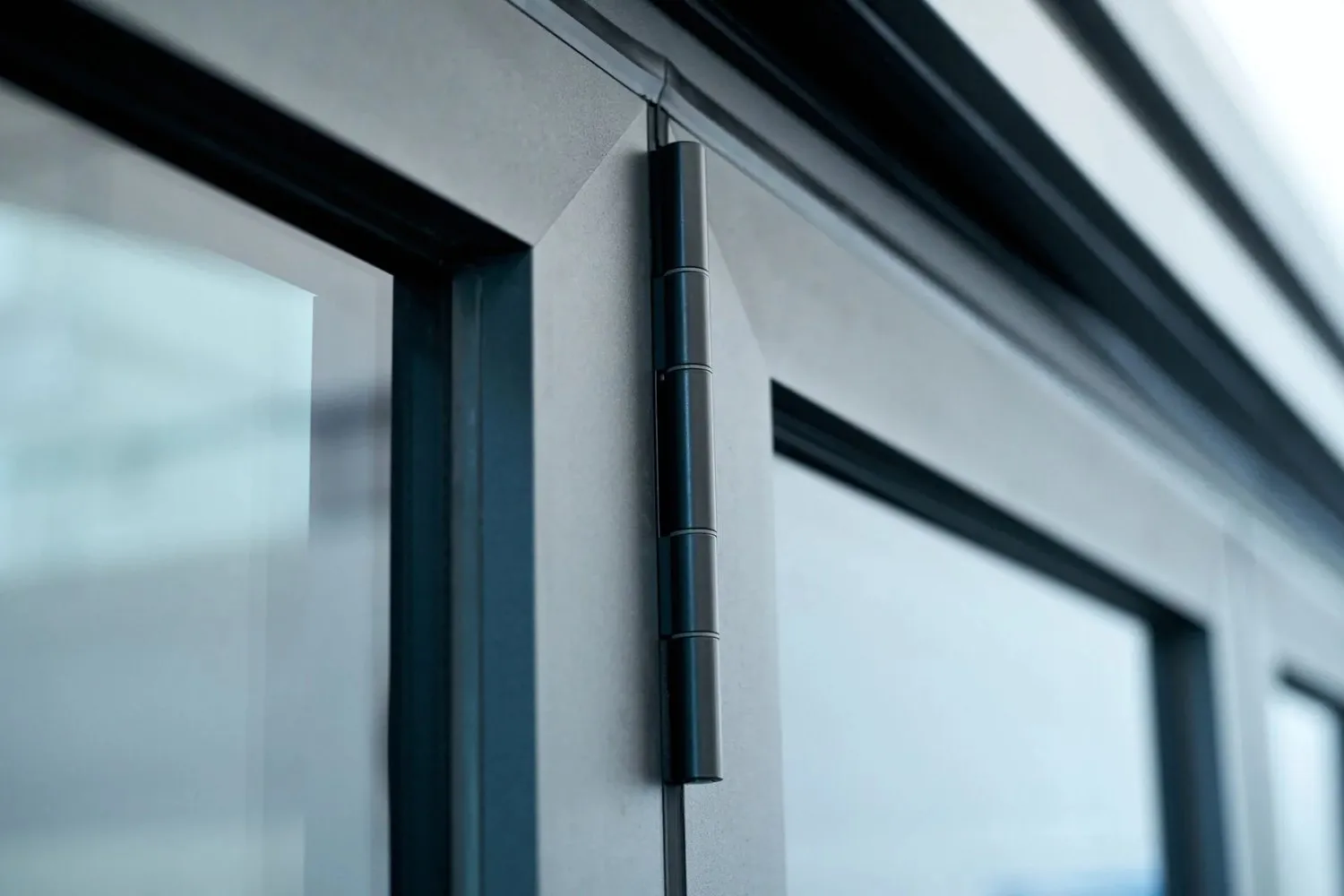
Heavier sets with longer fasteners, where a door has outgrown the hinges it was hung on and keeps dropping the lock off its strike.
-
Closers
A unit sized to the door and the traffic rather than adjusted one more time, so the lock gets delivered to the strike; closers have a page of their own.
-
Strikes
A strike that takes the full throw of the lock’s bolt, in a frame prepared to carry it.
-
Exit devices
Exit locks upgraded on the openings that carry them, with the detail on its own page.
-
Proper hardware matching
Components chosen for the door material, the swing, the lock and the cycle count, not for whatever fits the existing prep.
-
High-traffic components across a property
The same part upgraded everywhere it is failing, to one specification, instead of nine separate decisions.
Triggers
When the same repair stops holding
An upgrade is usually something you choose with a locksmith, after the same lock repair stops holding.
-
You’ve put the same closer above the same lock twice
A part that keeps failing is usually a part that was never sized for that opening.
-
Hinge screws keep working loose on a door whose frame is still solid
The frame isn’t the problem. The hinges are carrying more door than they were meant to, and the lock pays for it.
-
A side entrance has become the main staff entrance
The traffic changed, the lock hardware didn’t, and it is now wearing out at a rate nobody chose.
-
The push bar on your exit door is worn and staff are shouldering it
An exit lock that people have to fight is hardware on its way out.
FAQ
Hardware upgrades, the questions we actually get.
Don’t see yours? Call (857) 327-1767
Is upgrading the hardware cheaper than replacing the door?
Usually, because you keep the door, frame and lock you already own and pay for labor plus the components being changed. It is also often cheaper than repairing the same lock a third time, which is the comparison that matters more. Either way the price is quoted up front, with no hidden fees.
How do I know whether I need an upgrade, a lock repair or a new door?
Ask what has actually moved: if the door and frame still sit square and the trouble is a component that keeps failing, that is an upgrade. If the door has sagged or the frame has racked so the lock no longer meets the strike, that is lock and frame repair. If the door or frame is damaged past straightening, it is replacement. We look at the opening and tell you which of the three you are in, including when the answer is that nothing needs doing.
Will the new hardware fit my existing door and lock?
Usually, and where it doesn’t we say so before anything is ordered. Commercial doors are prepped for specific hardware footprints, so a heavier hinge or a different closer arm sometimes needs the prep extended or a mounting plate, which is part of the work rather than a surprise. Common commercial hinges, closers and strikes are the kind of components that are usually available, while narrow-stile and less common lock hardware is ordered in, and the lock keeps working on what it has until that arrives. All of which is why the opening gets looked at, and the scope and price agreed, before anything is specified.
What actually makes one hinge or closer heavier duty than another?
How it is built and what it fastens into, which is why the answer is a look at the opening rather than a number. On hinges it is the thickness of the leaves, the pin, and whether the knuckle runs on bearings instead of metal straight onto metal, together with fasteners long enough to reach sound material. On closers it is spring size and arm geometry, which between them decide how much door the unit can pull and how it behaves when somebody shoves it. On strikes it is depth and the backing behind it, because a strike holds the lock’s bolt no better than what the frame gives it to hold onto.
Will upgrading stop the lock problem coming back?
It stops it coming back when the cause was the component. Hardware chosen for the traffic the lock actually sees lasts the way the door does, which is the point of upgrading rather than repairing again. It does not stop it coming back if the real cause is underneath the hardware, which is why a locksmith checks the door and frame first.
Can hardware from different makers be mixed on one property?
Mechanically, yes. Hinges, closers and strikes are matched to the door, the lock and the opening rather than to each other, so one entrance can carry components from several makers without any trouble at all. Keeping to one specification has a different value: when every opening runs the same closer and the same hinge, whoever maintains the building learns one adjustment and sources one part instead of nine. We fit what each lock needs, and say where standardizing across the property is worth doing and where matching for its own sake is just cost.
Can a locksmith do this outside business hours?
Yes. We work 24/7 across Boston and the surrounding 30-mile area, so hardware on an entrance that can’t be out of service during trading hours can be changed when the building is closed.
Emergency
Break-in, failed lock, or locked out?
When your property’s security is compromised, our emergency locksmiths respond immediately to repair locks, replace compromised cylinders, and restore reliable operation.
- Commercial Lockouts
- Break-In Lock Repairs
- Emergency Cylinder Replacements
- 24/7 After-Hours Response
Request a quote
Request a quote
Our client services team is standing by to assist with locksmith services, lock changes, high-security hardware, master key systems, lock repairs, rekeying, and emergency security dispatch!
- Hours
- Monday – Sunday: 24/7 Service
- Service area
- Boston and surrounding 30-mile radius
Fully insured by Hiscox
- Google rating
- Verified Screened professionals
- Hiscox Fully insured
- Transparent pricing No hidden fees