
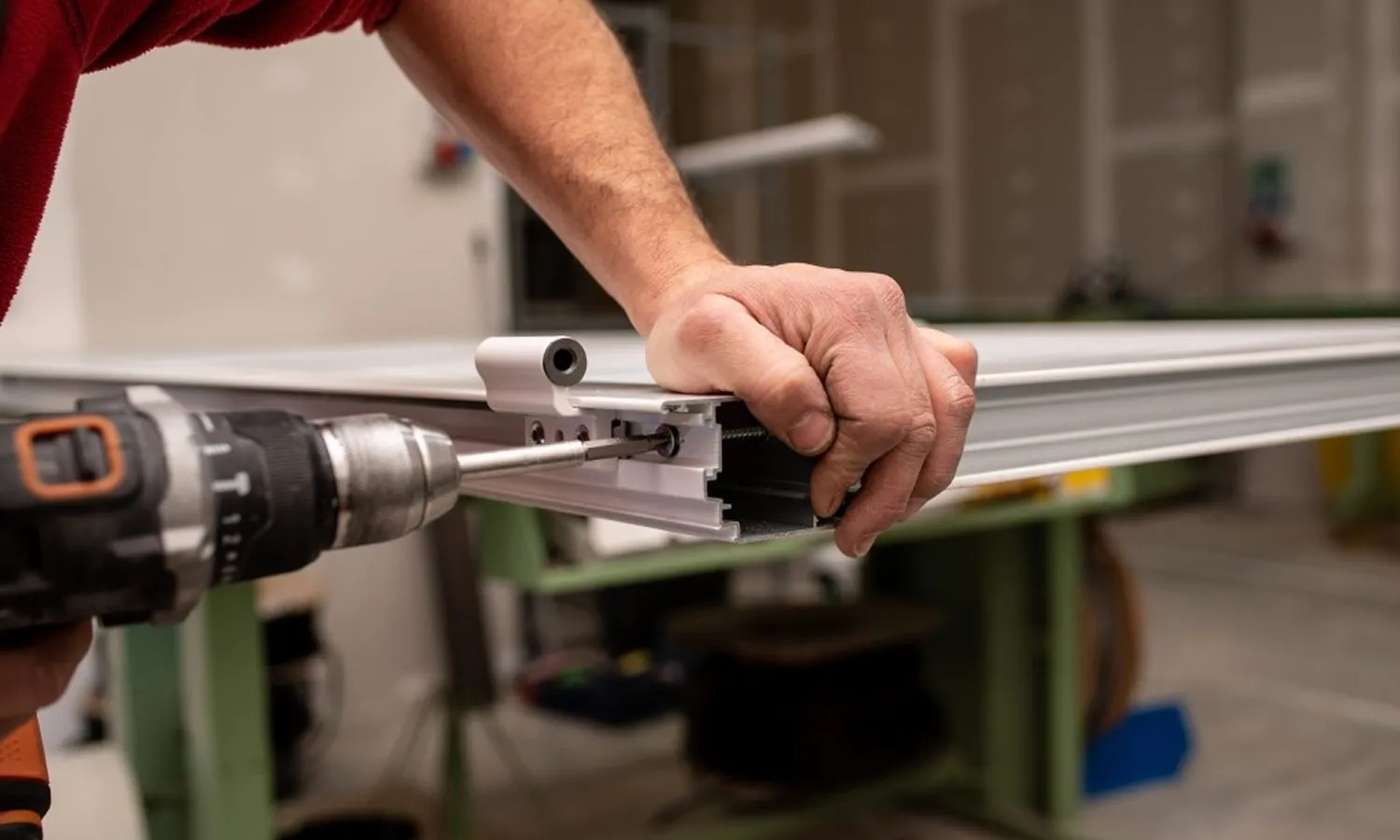




When the opening has stopped being worth adjusting.
Some openings stop being worth adjusting. A rear service entrance has been forced so many times that the lock edge is chewed and the frame no longer holds a screw. Or nothing is broken at all: a suite is changing tenants, a unit is becoming a restaurant, and the opening needs a different door than the one that is there.
We install commercial doors and the frames that carry them as locksmith work: steel doors and frames, and aluminum storefront doors, each with its lock hardware matched to it. A replacement is measured work. The new door has to match the opening’s handing, swing and thickness, the frame has to sit plumb in a wall that may not be, and the lock prep has to land where the lock goes. Hung right, the gaps are even and the lock meets the strike with nothing lifted.
Scope runs from one opening to a set of them. On a single entrance the questions are narrow: what fits the frame, and what lock it has to carry. Across a property, the openings worth replacing are rarely all of them. The entrances taking the most traffic are usually the ones past saving, while the rest need lock hardware or alignment.
Replacement is the expensive answer, so it should be the last one. If the door and frame are sound and the trouble is what is bolted to them, a closer that cannot handle the traffic or hinges failing early, that is a hardware upgrade. If the door has dropped, racked or the lock has stopped latching, that is lock and frame repair, and we will say so.
Where we do this work
- Offices
- Storefronts
- Restaurants
- Apartment & condo properties
- Warehouses
- Medical facilities
- Multi-tenant buildings
What’s included
-
Steel doors and frames
Hollow metal leaves and the frames they hang in, replaced together where the frame is past straightening, with the lock prepped and fitted.
-
Aluminum storefront doors
Narrow-stile entrances replaced where the door itself is finished, with the storefront lock fitted to it; adjusting existing ones has a page of its own.
-
Frames
A new frame set plumb and anchored, so the lock has something square to close against.
-
Properly matched hardware
The lock, hinges, closer and strike chosen for the new door and the traffic, and the lock keyed to the keys the building already carries.
-
Aligned, not just installed
Gaps checked around the door and the lock confirmed into the strike before we call the opening finished.
-
One door or several openings
A single entrance, or a set of openings across a property worked to one plan and one keying.
Triggers
When replacing beats repairing
Replacement is usually something a locksmith arrives at, not something you start with.
-
The frame won’t hold a screw anymore
Hinge screws spin, the strike works loose a week after it’s tightened, and there’s nothing solid left to anchor the lock into.
-
The door is damaged through, not just damaged
Rust at the bottom of a steel door, a split lock edge, a bottom rail that has pulled apart on a storefront.
-
You’ve repaired the same lock and frame twice and it’s still the worst entrance you own
At some point adjustments stop holding because the opening itself is done.
-
A new tenant needs a different door than the one that’s there
A change of use, a change of swing, or an entrance and a lock that were never right for the space.
FAQ
New doors and locks, the questions we actually get.
Don’t see yours? Call (857) 327-1767
Is replacing the door more expensive than repairing the lock and frame?
Yes, almost always, because you are paying for a door and often a frame rather than for labor and the few parts that wore out. It stops being the expensive option once an opening has been repaired twice and is still the problem entrance. We tell you which situation you are in before anything is ordered, and the price is quoted up front with no hidden fees.
Do I have to replace the frame as well as the door?
Not always. If the frame is still plumb, square and anchored, a new door can go into it. If the frame has been spread, rusted through at the floor or racked past straightening, hanging a new door in it puts a good lock into bad geometry, and the frame goes too. That judgment is made at the opening, not over the phone.
Does a new door mean changing the opening itself?
No. A replacement works to the opening you already have: the door is sized to it, and where the frame goes too, the new one sets into the same rough opening the old one came out of. A door of a different width or height is a different proposition, because the frame and the wall around it have to move, and that is building work rather than a locksmith’s. If that is what you are after, the door and its lock are the last step in it rather than the first.
Can my existing lock and hardware go back on the new door?
Sometimes. It depends on whether the prep on the new door matches what the old lock needs, and on whether the hardware is worth keeping. A replacement is a natural moment to look at that honestly rather than bolt a worn closer or a tired lock onto a new door, which is what hardware upgrades cover.
Can the new lock take the keys the building already uses?
Usually. The lock on a new door is a cylinder like any other, so it can be keyed to a key your people already carry, or rekeyed later when who holds that key changes. Where the property runs on a master key system, the new lock is keyed into it, so the master still opens the entrance and the new lock does not become the one exception on everybody’s ring.
How long is the opening out of service?
Less time than the job takes overall, because a door is ordered in rather than carried: the opening gets measured and the door and frame ordered first, and the existing lock stays in service until the new one is ready to go in. Where an opening has already failed and cannot be left as it is, the lock is made as secure as the opening allows in the meantime, and the replacement goes in on a second visit. The fitting itself depends on what is being replaced: a door into a sound frame is shorter than a door and frame together, and a frame in masonry is longer again than one in a stud wall. You will know the scope and the sequence before the old door comes off.
Can a locksmith do this outside business hours?
Yes. We work 24/7 across Boston and the surrounding 30-mile area, so an entrance that cannot be out of service during trading hours can be changed and its lock keyed when the building is closed.
Emergency
Break-in, failed lock, or locked out?
When your property’s security is compromised, our emergency locksmiths respond immediately to repair locks, replace compromised cylinders, and restore reliable operation.
- Commercial Lockouts
- Break-In Lock Repairs
- Emergency Cylinder Replacements
- 24/7 After-Hours Response
Request a quote
Request a quote
Our client services team is standing by to assist with locksmith services, lock changes, high-security hardware, master key systems, lock repairs, rekeying, and emergency security dispatch!
- Hours
- Monday – Sunday: 24/7 Service
- Service area
- Boston and surrounding 30-mile radius
Fully insured by Hiscox
- Google rating
- Verified Screened professionals
- Hiscox Fully insured
- Transparent pricing No hidden fees