

FAQ
Access Control & Entry, before you pick one.
Don’t see yours? Call (857) 327-1767
Does every lock in the building want a code on it?
No, and a property where every door has one is usually a property that bought hardware before it decided anything. Coded openings and keyed openings mix in the same building all the time, and on most buildings keys stay on most locks. That is the normal outcome rather than a job left half done. What earns a code or a credential is a lock where the people using it keep changing, or where a key would otherwise be loaned at the start of a shift, left on a hook or cut for somebody who should not be carrying one: a side door, a stock room, an employee entrance. Locks used by a handful of long-standing people are usually fine on keys, and an opening with something behind it that you cannot afford to lose is a question about how heavy the lock is rather than about how it opens. We go opening by opening and say which is which before anything is ordered.
Someone leaves on Friday. What has to happen on Monday?
That depends on what their lock opens to, and it is the sharpest practical difference between the two services here. Under a credential, you withdraw that person’s PIN, phone or card at the lock and nobody else at the door is affected. Under a shared code, there is nothing to withdraw: the code is changed at the lock and then told to everyone still using the door, so a departure means a visit and a conversation rather than a deletion. Under a key, you are waiting on metal coming back, and if nobody can say how many copies exist, the honest answer is rekeying rather than hope. It is worth deciding this per lock, because how much work a departure creates is a reasonable way to pick what goes on that opening.
Can the lock we already have stay on the door?
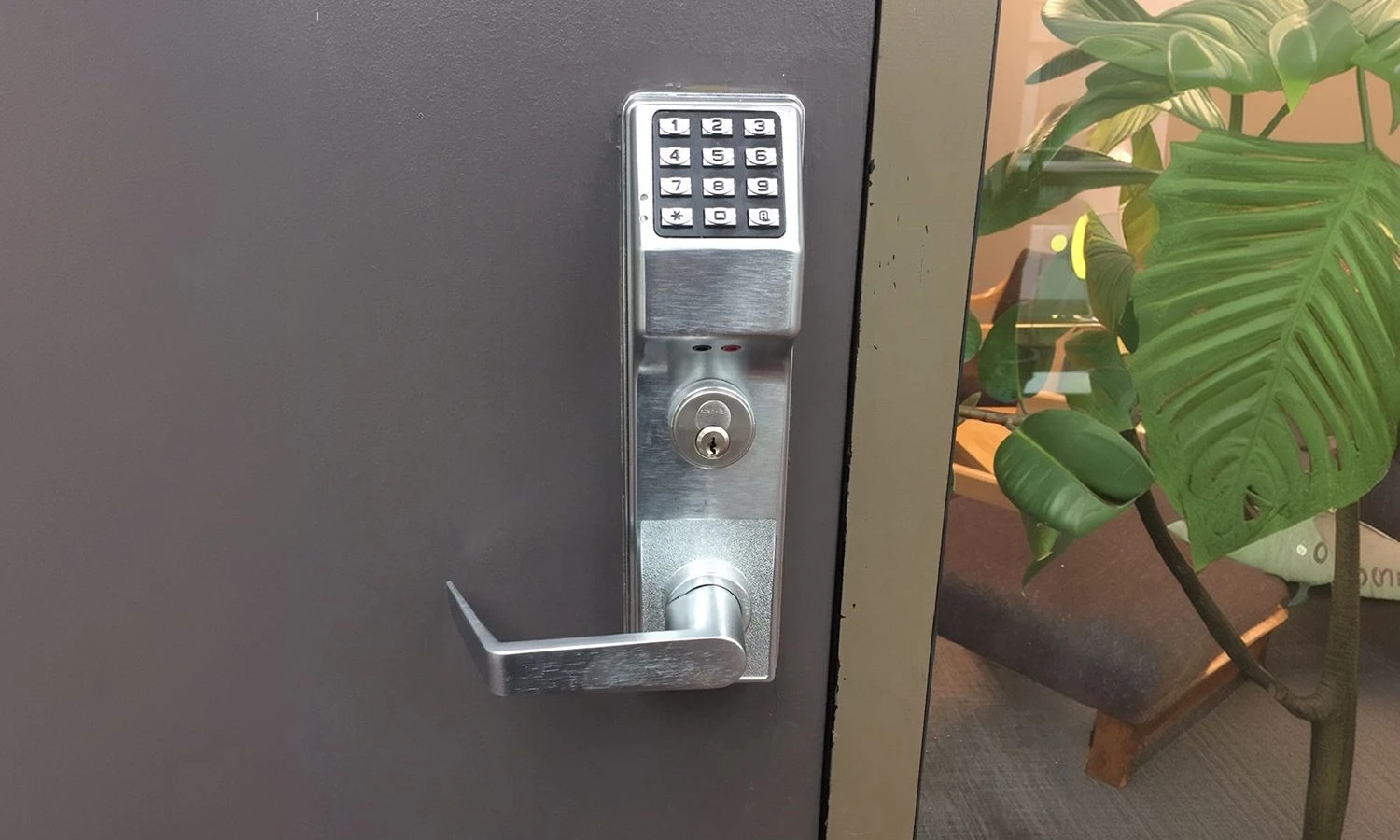
Usually not, and it is better to know that early. Both of these are complete lock bodies: the code mechanism or the credential reader is part of the lock rather than an attachment to the one you own, so the old lock comes off and the new one goes on. What often does carry over is the hole it goes into, since a door already prepped for standard commercial hardware will generally take a new lock in the same prep, while a door that is not prepped for it, or a stile too narrow for what you had in mind, needs work on the door before anything is fitted. The parts underneath matter as much: the strike, the alignment and the way the door hangs decide whether the new lock keeps working, which is why a door that drags gets dealt with as a door and not as a lock. That is also why these are less of a drop-in than the box suggests, and anything that does come off a door is yours and can be left with you.
Which locks should not depend on a battery?
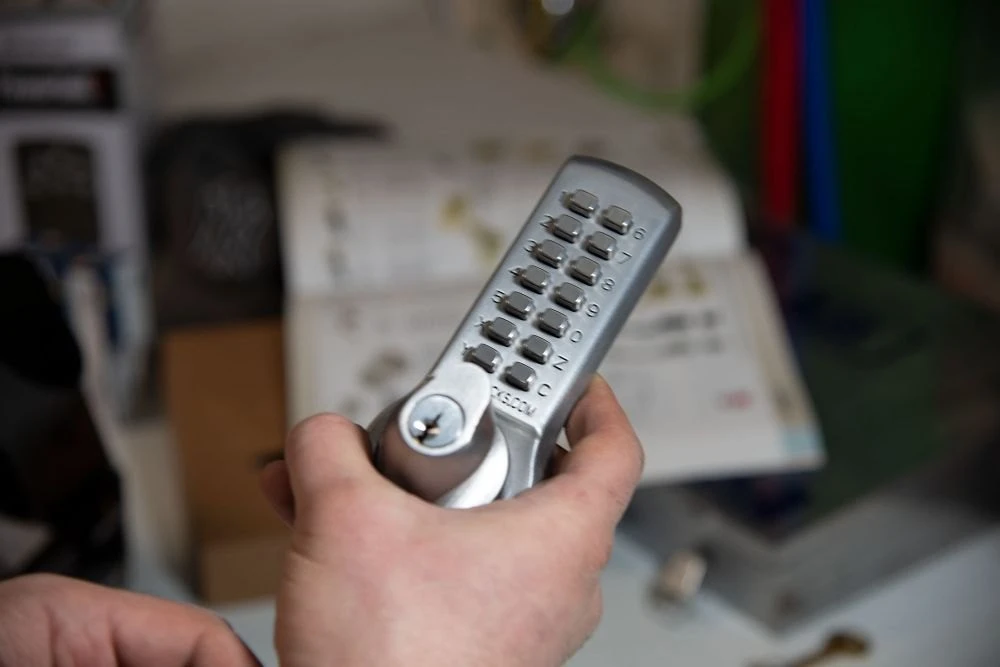
The ones nobody is going to check. A battery-powered lock normally warns well before it quits, but the warning only helps if somebody in the building owns it, and on a back door that nobody looks at, that is exactly the part that gets missed. Mechanical keypad locks have no battery, no board and no power supply at all, which is why they tend to end up on the openings that have to keep working whatever the building’s electrics are doing. Across a property the split usually falls out the same way: credentials on the locks where who gets in keeps changing, mechanical codes on the locks that simply need to open, keys on the rest. Neither of these is wired into the building, so power is only ever a question about a battery in a lock, never about the door losing the thing that locks it.
Can we do a few locks now and more later?
Yes, and on a building of any size that is how it normally happens. Each round is its own visit and its own agreed scope, so stopping after any of them leaves you with finished locks rather than half a project, and nothing here waits on anything else being installed, because every one of these locks works on its own door by itself. The part worth settling at the start is which locks are getting codes, which are getting credentials and which are staying keyed, because that is easy to change on paper and not easy to change once hardware is on the door. Common commercial hardware is generally available in the trade while narrow-stile and less common hardware is ordered in for the opening it has to fit, which is mostly what decides whether an opening is finished on the visit or on a second one. We work 24/7 across Boston and the surrounding 30-mile area, so a round can run before opening or overnight instead of through a trading day.
Who is allowed to change a code, and what happens when that person leaves?
Settle it before the hardware goes on, because it is the part that quietly goes wrong later. A shared code needs one person who owns it, knows when it should change and tells the people who use the door. A credential set needs the same thing, plus a record somewhere other than one person’s memory of who currently holds what. When the person who held all of it leaves, or the property changes hands, that is a handover with a shape to it: the code on each lock, who holds credentials on which lock, and which openings are still on keys. What we find and what we do gets written down and left with you, so the next change starts from the building as it actually is rather than from guesswork.
How is the price settled before anybody has seen the locks?
It is not, and it should not be. What decides the scope is the opening: which lock is on it now, whether the prep it is cut for will take the new lock, how narrow the stile is, how many locks are involved, whether the door itself needs attention first, and whether a part has to be ordered in. None of that is reliably knowable over the phone. So the sequence is the same whichever of the two it turns out to be: the locks and the doors get looked at, the scope and the price are agreed with you, and then work starts, with nothing ordered that the building does not need and no hidden fees.
Emergency
Break-in, failed lock, or locked out?
When your property’s security is compromised, our emergency locksmiths respond immediately to repair locks, replace compromised cylinders, and restore reliable operation.
- Commercial Lockouts
- Break-In Lock Repairs
- Emergency Cylinder Replacements
- 24/7 After-Hours Response
Request a quote
Request a quote
Our client services team is standing by to assist with locksmith services, lock changes, high-security hardware, master key systems, lock repairs, rekeying, and emergency security dispatch!
- Hours
- Monday – Sunday: 24/7 Service
- Service area
- Boston and surrounding 30-mile radius
Fully insured by Hiscox
- Google rating
- Verified Screened professionals
- Hiscox Fully insured
- Transparent pricing No hidden fees